Project Overview
Customer integration requests had historically required significant internal involvement to configure, troubleshoot, and maintain connections between the product and customers’ external systems. This created a resource-intensive implementation model that limited scalability while making integrations slower and more difficult for customers to deploy.
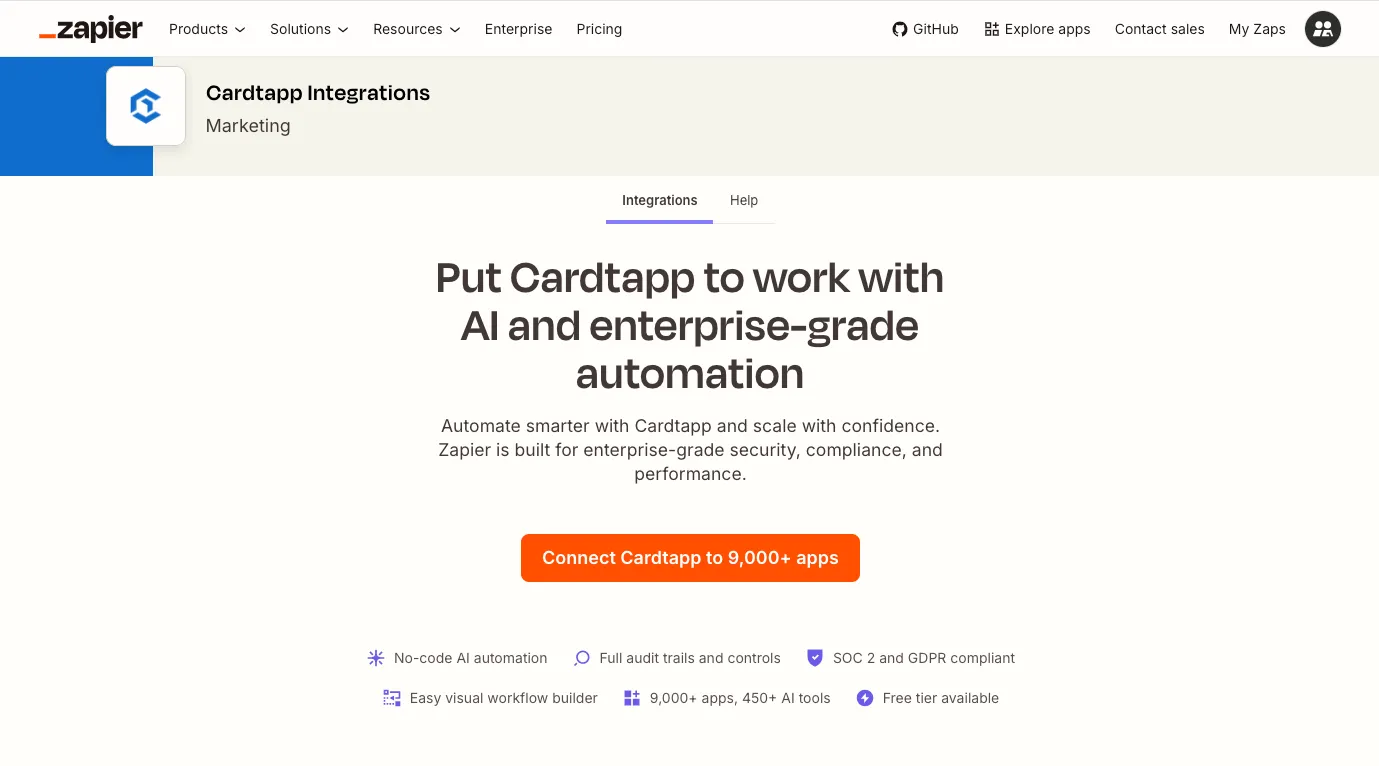
I led the product launch and implementation of a deeper Zapier integration designed to turn those custom integration workflows into a scalable, self-service customer experience. The initiative combined product strategy, integration implementation, UI/UX design, customer enablement, and ongoing management of the company’s listing within the Zapier ecosystem.
By making the integration easier to discover, configure, and use directly within the product, customers gained access to connectivity with more than 5,000 systems while dramatically reducing the amount of internal support required to implement and maintain integrations.
Project Scope
Product Launch & Implementation — Drove the launch and implementation of the expanded Zapier integration, coordinating the product experience, customer-facing functionality, positioning, and rollout required to bring the capability to market.
Integration Strategy — Helped transition integration delivery from resource-intensive, internally supported workflows toward a scalable automation model built around Zapier’s broader integration ecosystem.
In-Product UI/UX Design — Designed the in-product setup experience to make connecting and configuring Zapier workflows more intuitive for customers, reducing technical friction and simplifying the path from discovery to activation.
Self-Service Customer Experience — Built the integration experience around customer self-service so users could establish connections without depending on internal teams for routine setup and implementation.
Zapier Network Listing & Maintenance — Managed the company’s integration presence within the Zapier network, including listing and ongoing maintenance required to make the product accessible within the broader ecosystem.
Ecosystem Connectivity — Expanded the practical integration footprint of the product by giving customers a standardized path to connect with more than 5,000 external systems available through Zapier.
Customer Enablement — Developed the experience and supporting workflows around faster integration activation, helping customers move from previously manual or assisted implementation processes to a repeatable setup that could be completed in minutes.
Operational Scalability — Designed the integration model to reduce the ongoing burden placed on internal resources for customer-specific integration implementation, troubleshooting, and maintenance.
Outcomes
- Expanded customer integration access to 5,000+ systems through the Zapier ecosystem, dramatically increasing the breadth of connectivity available without requiring individual integrations to be developed and maintained internally.
- Reduced internal resources required for integration support and maintenance by approximately 90%, shifting routine implementation toward a scalable self-service model.
- Decreased typical customer integration implementation time from hours or days to approximately 10–15 minutes, significantly reducing time-to-value.
- Improved the in-product integration experience through purpose-built UI/UX that made setup more intuitive and reduced technical barriers for customers.
- Created a more scalable integration strategy that enabled the organization to offer broad third-party connectivity without a corresponding increase in engineering or support overhead.
- Strengthened the product’s value proposition by transforming integrations from a potentially resource-intensive implementation requirement into an accessible, customer-driven capability.
- Established a maintainable presence within the Zapier integration ecosystem, extending product interoperability while creating infrastructure that could support future customer workflows and automation use cases.